Details
ISBN/EAN: 978-3-525-55057-1
Einband: gebundenes Buch
Weitere Details
Auflage:
1. Auflage 2013
1. Auflage 2013
Erschienen am:
18.09.2013
18.09.2013
Sprache:
Deutsch
Deutsch
Umfang:
235 S.
235 S.
Format (T/L/B):
2.1 x 23.8 x 16.3 cm
2.1 x 23.8 x 16.3 cm
Hersteller:
Vandenhoeck & Ruprecht
ute.schnueckel@brill.com
Theaterstraße 13
DE 37073 Göttingen
Vandenhoeck & Ruprecht
ute.schnueckel@brill.com
Theaterstraße 13
DE 37073 Göttingen
Weitere Details
arrow_forward_ios

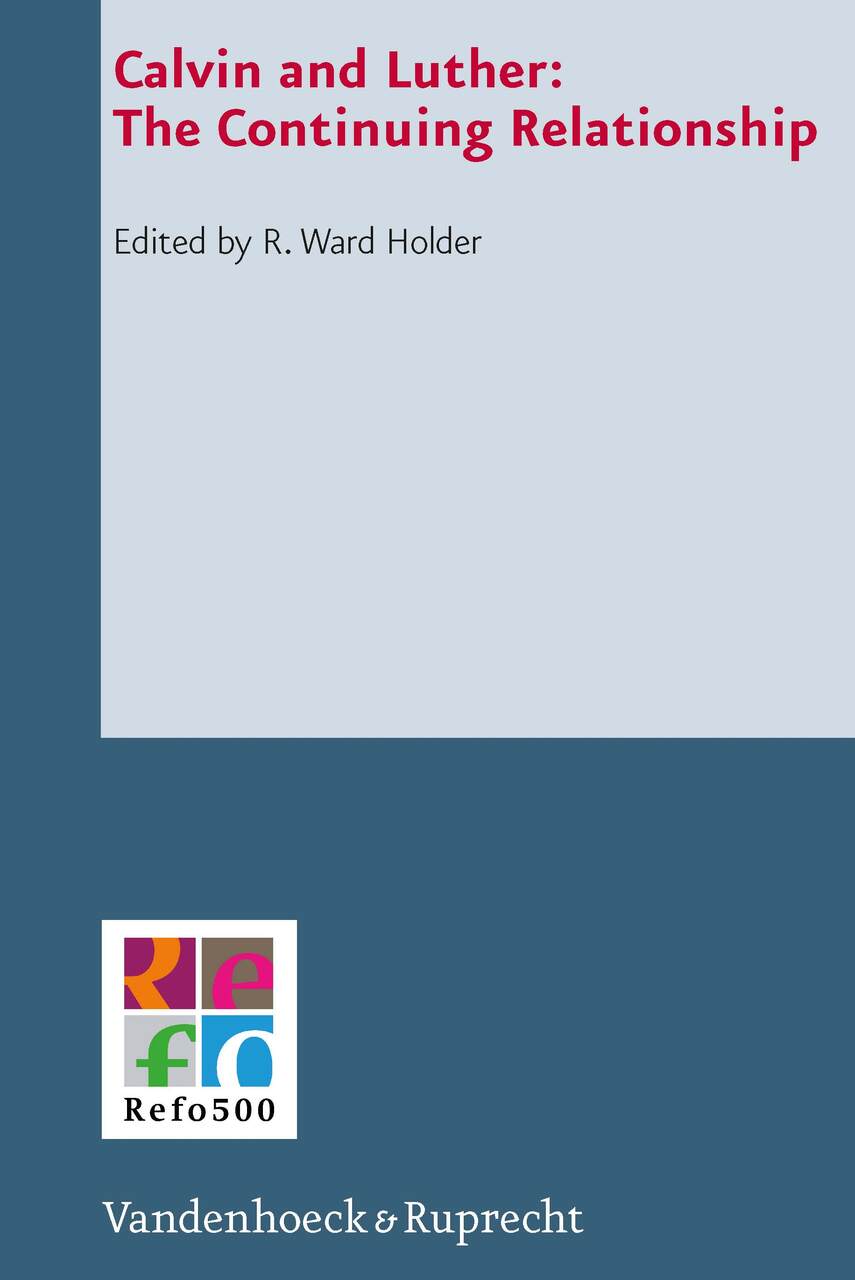
Calvin and Luther: The Continuing Relationship
Refo500 Academic Studies (R5AS) Band 012, Refo500 Academic Studies (R5AS) 12
130,00 €
inkl. MwSt.
Lieferbar innerhalb 1 - 2 Wochen
Beschreibung
The reforms begun by Luther and Calvin became two of the largest and most influential movements to arise in the sixteenth century, but frequently, these two movements are seen and defined as polar opposites - ones theology is Reformed or Lutheran, one is a member of a Reformed or Lutheran congregation. Historically, these were two very separate movements - but more remains to be understood that can best be analyzed in the context of the other.Just as surely as the historical question of the boundaries between Calvin and Luther, or Lutheranism and Calvinism must be answered with a resounding yes, the ongoing doctrinal questions offer a different picture. In the more systematic doctrinal articles, an argument is forwarded that the broad confessional continuity between Luther and Calvin on the soteriological theme of union with Christ offers still-unexplored avenues to both deeper understandings of soteriology. Through such articles, we begin to see the possibility of a rapprochement between Calvin and Luther as sources, though not as historical figures. But that insight allows the conversation to extend, and bear far greater fruit.Contributors are, J.T. Billings, Ch. Helmer, H.P. Jürgens, S.C. Karant-Nunn, R. Kolb, Th.F. Latini, G.S. Pak, J. Watt, T.J. Wengert, P. Westermeyer, and D.M. Whitford.
Schlagzeile
The insight in the confessional divisions of the reforms begun by Luther and Calvin allows the conversation to extend, and bear far greater fruit. Ongoing doctrinal questions offer a different picture.