
Details
ISBN/EAN: 978-1-442-21197-1
Format: EPUB
DRM: Adobe DRM
DRM: Adobe DRM
Weitere Details
Weitere Details
arrow_forward_ios
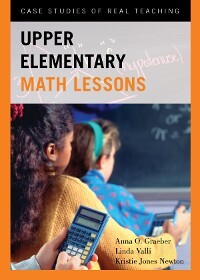
Upper Elementary Math Lessons
eBook - Case Studies of Real Teaching
Beschreibung
Engaging students in worthwhile learning requires more than a knowledge of underlying principles of good teaching. It demands considerable practice as well as images of what good teaching in particular situations and for particular purposes might look like. This volume provides these images. These cases were written from authentic, unrehearsed lessons taught by upper-elementary classroom teachers to diverse groups of real students in intact classrooms. Each lesson contains elements of sound instructional practice from which both preservice and in-service teachers can benefit. Cases are not meant to be ideal, but rather to evoke ways of seeing and thinking about good classroom instruction for all learners. Accompanied by analytic commentaries from experts representing a particular perspective, such as special education and ESOL, these unrehearsed cases are written with the understanding that teaching is complex and multi-dimensional. The cases are drawn from a four-year study of 4th and 5th grade mathematics instruction of culturally diverse classrooms with relatively high rates of students from low-income families.
Über Anna O Graeber, Linda Valli, Kristie Jones Newton
Anna Graeberis Associate Professor Emerita in the Department of Curriculum and Instruction, with her doctorate in mathematics education from Teachers College, Columbia University. Prior to teaching at the University of Maryland, she served in various mathematics curriculum and staff development positions at Research for Better Schools, a regional educational laboratory in Philadelphia. She is best known for her research on students' misconceptions in mathematics.
Linda Valli is the inaugural Jeffrey& David Mullan Professor of Teacher Education and Professional Development in the Department of Curriculum and Instruction at the University of Maryland. Her Ph.D. is from the Department of Education Policy Studies at the University of Wisconsin, Madison, where she developed her interests in educational inequalities and critical theory. She has used cases in her own teaching and conducts research on learning to teach, professional development, culturally-responsive teaching, and education policy.
Linda Valli is the inaugural Jeffrey& David Mullan Professor of Teacher Education and Professional Development in the Department of Curriculum and Instruction at the University of Maryland. Her Ph.D. is from the Department of Education Policy Studies at the University of Wisconsin, Madison, where she developed her interests in educational inequalities and critical theory. She has used cases in her own teaching and conducts research on learning to teach, professional development, culturally-responsive teaching, and education policy.
Inhalt
Preface
Alternative Thematic Frameworks
Introduction
Part I: The Teaching of Mathematics - Lesson Cases
Case 1: Promoting One of the Meanings of Multiplication: Requesting Alternate Methods in Order to Foster Understanding
Case 2: Fractions, Decimals and Percents: Evoking Student Reasoning
Commentary: A Teacher Educator Perspective
Case 3: Getting a Sense of Grams: Building Conceptual Understanding
Commentary: A Teacher Educator Perspective
Case 4: Converting Among Customary Units of Measure: Attending to Students' Developmental Levels
Commentary: A Teacher's Perspective
Case 5: Converting Units Within a System of Measurement: Encouraging Resourcefulness
Commentary: An English for Speakers of Other Languages (ESOL) Perspective
Case 6: Distinguishing Between Area and Perimeter: Using Multiple Representations to Aid Discrimination
Case 7: Exploring the Meanings of "Volume": Recognizing a Word's Everyday Meaning and its Mathematical Meaning
Commentary: An English for Speakers of Other Languages (ESOL) Perspective
Commentary: A Teacher's Perspective
Case 8: The Importance of Sample Size: Posing High Level Questions to Build Understanding
Commentary: A Teacher's Perspective
Case 9: Continuous versus Discrete Data: Using Concept Attainment to Define Mathematical Terms
Part II: Perspectives on Teaching - Commentaries
Learner-Centered Psychological Principles
Moral Perspectives on Teaching
Perspective from the Special Education Math Literature
A Principal's Perspective
References
List of Contributors
Alternative Thematic Frameworks
Introduction
Part I: The Teaching of Mathematics - Lesson Cases
Case 1: Promoting One of the Meanings of Multiplication: Requesting Alternate Methods in Order to Foster Understanding
Case 2: Fractions, Decimals and Percents: Evoking Student Reasoning
Commentary: A Teacher Educator Perspective
Case 3: Getting a Sense of Grams: Building Conceptual Understanding
Commentary: A Teacher Educator Perspective
Case 4: Converting Among Customary Units of Measure: Attending to Students' Developmental Levels
Commentary: A Teacher's Perspective
Case 5: Converting Units Within a System of Measurement: Encouraging Resourcefulness
Commentary: An English for Speakers of Other Languages (ESOL) Perspective
Case 6: Distinguishing Between Area and Perimeter: Using Multiple Representations to Aid Discrimination
Case 7: Exploring the Meanings of "Volume": Recognizing a Word's Everyday Meaning and its Mathematical Meaning
Commentary: An English for Speakers of Other Languages (ESOL) Perspective
Commentary: A Teacher's Perspective
Case 8: The Importance of Sample Size: Posing High Level Questions to Build Understanding
Commentary: A Teacher's Perspective
Case 9: Continuous versus Discrete Data: Using Concept Attainment to Define Mathematical Terms
Part II: Perspectives on Teaching - Commentaries
Learner-Centered Psychological Principles
Moral Perspectives on Teaching
Perspective from the Special Education Math Literature
A Principal's Perspective
References
List of Contributors
E-Book Informationen
Ab dem 02.02.2026 wird der bisher verwendete Kopierschutz Adobe DRM durch den Kopierschutz ReadiumLCP ersetzt.
Alle E-Books, die mit einem harten Kopierschutz versehen sind, werden ab diesem Zeitpunkt ausschließlich mit Readium LCP anstelle von Adobe DRM ausgeliefert.
Alle E-Books, die mit einem harten Kopierschutz versehen sind, werden ab diesem Zeitpunkt ausschließlich mit Readium LCP anstelle von Adobe DRM ausgeliefert.
Das Handling von E-Books mit Readium LCP ist für Endnutzer deutlich komfortabler als bisher, da keine zusätzliche ID benötigt wird. Beim ersten Öffnen eines heruntergeladenen Buches wird ein Code angezeigt der von dem Nutzer in ein sich automatisch öffnendes Fenster eingegeben werden muss. Danach lässt sich das E-Book öffnen und lesen.
Ergänzend möchten wir darauf hinweisen, dass PocketBook-Reader den Kopierschutz Readium LCP vollständig unterstützen. Lediglich wenn Readium LCP-geschützte Titel auf einem PC oder Laptop gelesen werden sollen, ist der Thorium Reader erforderlich, der kostenfrei zur Verfügung steht. https://www.edrlab.org/software/thorium-reader/
Bei E-Books die mit Readium LCP geschützt sind erscheint bei dem ersten Öffnen auf ihrem Reader ein Hinweisfenster mit der Aufforderung ein Passwort einzugeben. Gleichzeitig öffnet sich ein Infofeld in dem das Passwort steht. Tragen Sie dieses Passwort in das Eingabefeld ein und bestätigen Sie die Eingabe. Danach öffnet sich das E-Book automatisch. Um E-Books die mit Readium LCP geschützt sind auf einem Tablet/Laptop/Smartphone lesen zu können, benötigen Sie ein Programm, das in der Lage ist, mit diesem Kopierschutz umzugehen. Das ist z.B. der Thorium Reader (Windows, Mac, Linux) oder die PocketBook App (iOS, Android). Fügen Sie das heruntergeladene E-Book in das Programm ein. Bei dem ersten Öffnen erscheint ein Hinweisfenster mit der Aufforderung ein Passwort einzugeben. Gleichzeitig öffnet sich ein Infofeld in dem das Passwort steht. Tragen Sie dieses Passwort in das Eingabefeld ein und bestätigen Sie die Eingabe. Danach öffnet sich das E-Book automatisch